The Green as a Mirror
A reflection on golf as a ritual, reclamation, and the quiet strength of being present for oneself.
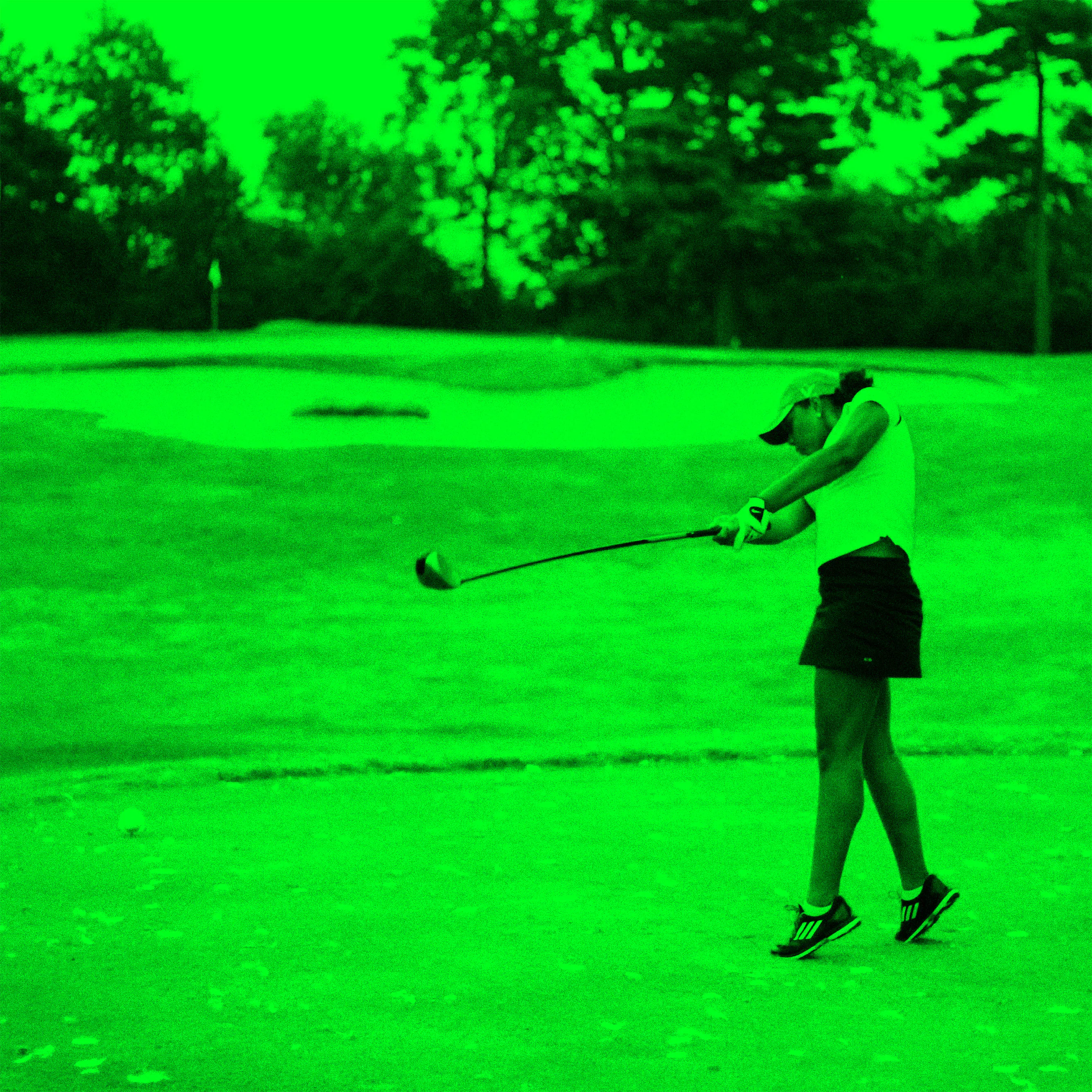
It started with my alarm clock going off. Then, that little voice in my head said what I already knew: it’s time. Time to stop waiting. Time to do something for myself. Time to play golf.
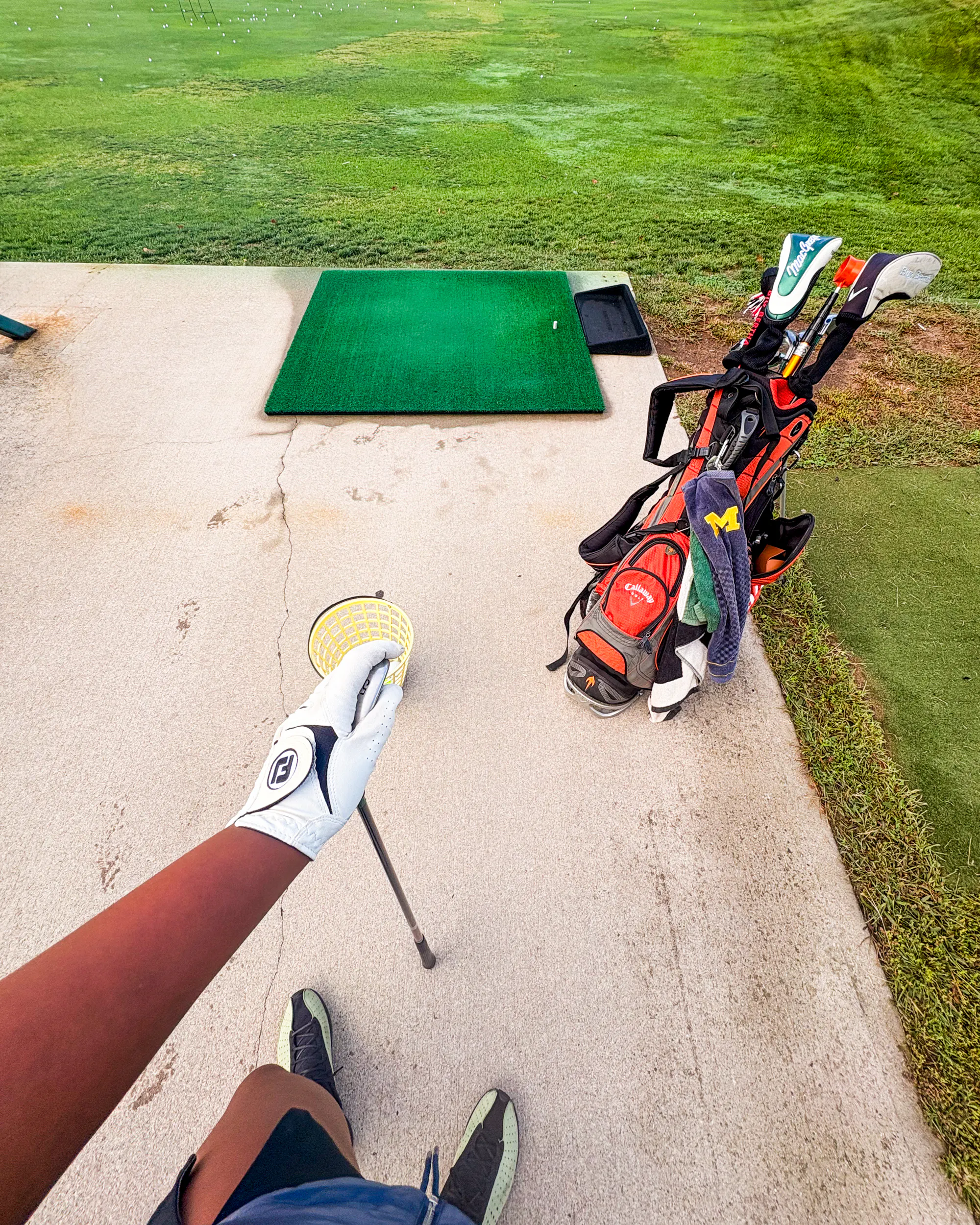
It still feels surreal to have lived in New York for over a decade without playing a real round of golf until that morning. It was my first tee time in the city, and I did it solo. I woke up at dawn in the middle of the week, packed my clubs into my car, and drove south down Nostrand Avenue to Flatbush Avenue. The early morning air was crisp, my favorite coffee shops were closed, and I was about to play nine holes of golf. It had been over a year since I last played. Since before my minimal invasive shoulder surgery and before my breakup. My nerves felt like a calm adrenaline rush, a mix of confidence in my skills and anxiety over the possibility of not performing well.
Growing up, golf was a significant part of my life. My dad, like many Black fathers raising children in American suburbs who were obsessed with Tiger Woods, saw something in me early on. I started playing at the age of ten, continued through high school, and even received a couple of scholarships. However, by college, I had lost interest in competing. When I moved to New York City after living in Michigan my whole life, golf wasn’t even on my mind. The most I did was hit balls at Chelsea Pier once or twice a year.
When I pulled into the parking lot of the course, it was already buzzing with life. Carts were moving around, lawnmowers were humming, and the smell of cut grass mixed with gasoline filled the air. Everyone seemed to have their rhythm; older white men in polos were whispering about tee times while tugging their bags along. And then there was me, the only Black woman out there, standing in a landscape that has never really felt designed for me. Still, I recognized it. The smell, the sound, the way the morning light hit the green just right, familiar, yet unwelcoming.
Older white men in polos were whispering about tee times while tugging their bags along. And then there was me, the only Black woman out there, standing in a landscape that has never really felt designed for me.
I caught myself slipping into an old habit: pretending I knew exactly where I was going. I acted as if I had played this course a hundred times, even though it was my first visit. I waved at a man headed to the next hole, then instantly panicked because I couldn’t figure out which tee box was the first. It’s funny how you can know a game so deeply and still feel like you’re playing it on someone else’s terms.
But then I approached the box, placed my ball on the tee, and looked toward the direction I needed to go down the fairway. It was quiet, just me, my thoughts, and the sound of a weed whacker in the distance. I swung, missed, reevaluated, and then swung again. The shot wasn’t perfect, but it went far enough. I exhaled. It wasn’t about winning or playing well; it was about showing up for myself and committing to what brings me joy.
Golf was something I learned before I had the language to describe its significance. I grew up playing in Rochester, Michigan, where grass, lakes, and tree lines were everywhere. I spent my summers at golf camp, weekends at Carl’s Golf Land with my trainer, and late afternoons after school on the course with my team. I learned the mechanics of patience: how to stand, how to breathe, and how to recover from a bad shot. Golf taught me to think before reacting and to let things go.
Returning to the game after years away felt like revisiting a childhood home that was both familiar and changed from what I remembered. The layout, the smell, and the quietness all came flooding back to me, but my body felt different. I was five months post-shoulder surgery, gradually easing into everything: yoga, Pilates, dating, and now golf. My swing felt stiff, and my shoulder was cautious. I wasn’t playing for power; I was playing for peace and growth.
On the fifth hole, the man doing rounds stopped to check in. I smiled, took my stance, and completely choked. Two bad shots in a row. I could feel the group behind me approaching, and that pressure to rush clouded my mind. The voice inside my head kept repeating, “You used to be so good at this.” Suddenly, it was no longer just about golf; it became about control. I realized how quickly doubt can take over when you feel like you're being watched.
© Devine Blacksher
And alone on that course, all my intrusive thoughts showed up to play too. The ones that whisper you’re not ready, that replay moment from a relationship you can’t rewrite. But that’s the thing about golf; it gives you nowhere to hide. You can’t scroll, can’t talk your way out of a bad swing. It’s just you and what’s still unresolved. When I finally landed a clean shot, I felt it. The small click of alignment. The sound, the lift, the silence after. It wasn’t just about the swing. It was about me. Meeting myself again in motion.
Golf has always been an exclusive pastime, a marker of privilege that indicates who is welcome to relax and enjoy. Even public courses still carry the weight of that history. For a long time, they were playgrounds for people who looked nothing like me. There are exceptions, of course — Tiger Woods, Michelle Wie, and other famous athletes and celebrities of color, but those images never reflected my sense of belonging. Growing up, I didn’t know many Black women who played.
A few weeks after that solo round, I went back out with three friends. We were all laughing, dressed in our best outfits, and taking our time. Three of us were Black, and one was not. A man from the group behind us approached as we were at the tee box for the next hole and said, “You guys are the best dressed on the course... just wondering if you could pick up the pace a little? We’re trying to finish all 18 holes before dark.” Could we have sped up? Sure, but there were people in front of us, and rushing would have meant we’d end up waiting even longer. It was a small, casual remark, but the message was clear: You don’t belong here enough to take your time.
Moments like that stick with you. You acknowledge them, you keep swinging, and you let that silence speak for itself. I’ve learned that taking up space in places that weren’t built for you isn’t just about being present; it’s about protest. It’s a reminder that rest and recreation aren’t luxuries; they are rights.
For all its formality, the polos, the etiquette, the manicured lawns, golf is still about moving through landscape. The wind rustling through the trees, the chirping of birds, and the small animals darting across the fairway. It demands the same attention as hiking, another favorite of mine: you slow down, you notice, you listen. The peace is real, even if nature is carefully controlled.
I’ve learned that taking up space in places that weren’t built for you isn’t just about being present; it’s about protest. It’s a reminder that rest and recreation aren’t luxuries; they are rights.
Every time I play, I think I’m just there to hit the ball, but there’s more. The challenge, the frustration, the focus, all mirror what I’ve been working through outside the course. Healing requires the same discipline as golf: the ability to keep showing up for yourself, even when it doesn’t look pretty. There’s a moment when you’re standing over the ball, trying to shake off that last bad hole, and you have to consciously choose not to carry it with you. You take a deep breath and reset. That’s where the calm resides.
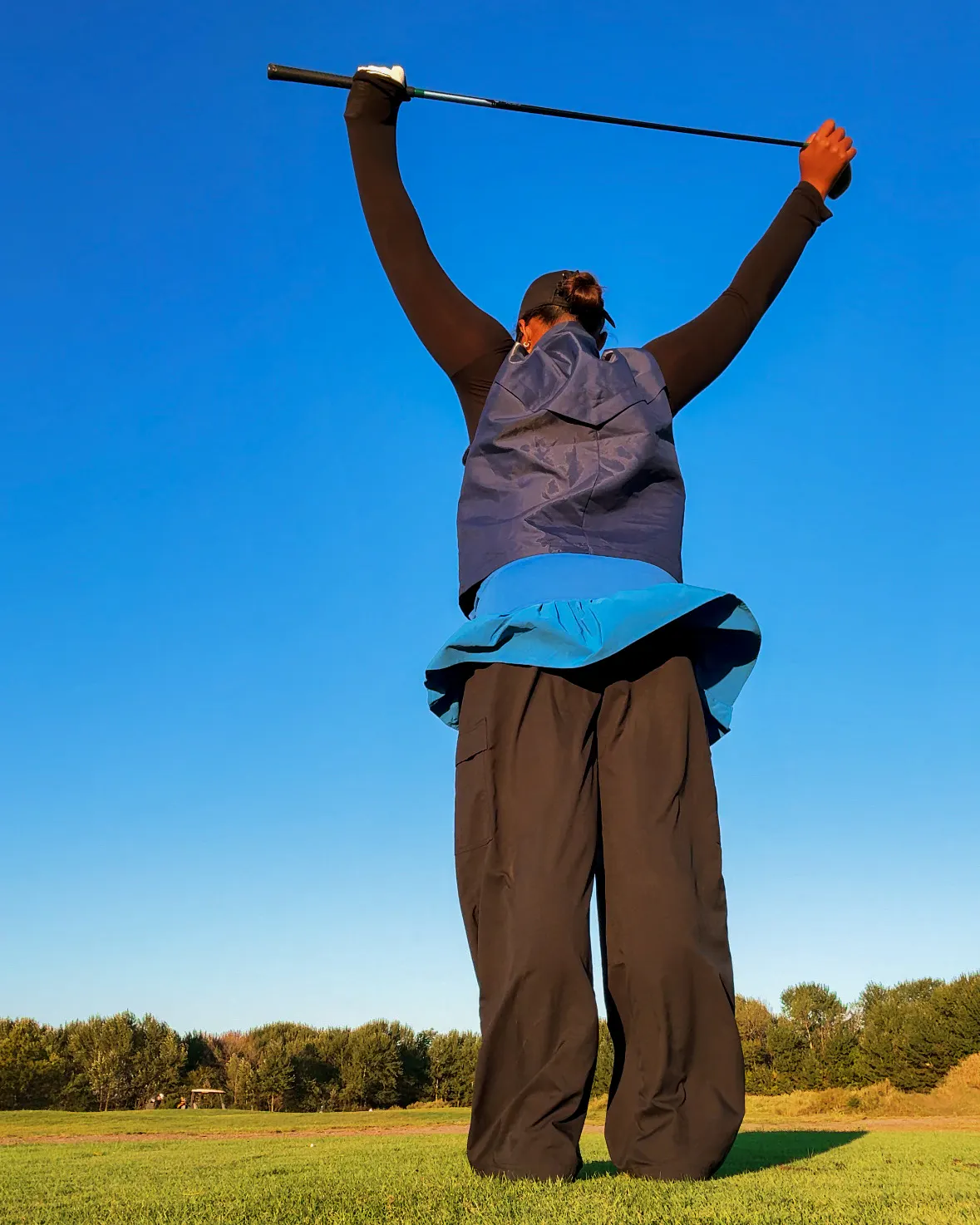
The game teaches you control, but it also teaches you to surrender. You learn to trust muscle memory, to stop overthinking, and to just swing. And when you do, when you finally make those clean shots back-to-back, it feels like defying gravity. Those little victories, those par or birdie moments, keep me coming back. Because each one is a reminder: when I stop fighting myself, everything clicks into place.
Getting back out there these last couple of months has made me realize that golf, for me, isn’t just a sport; it’s a mirror. It reflects exactly where I am that day: my mood, my patience, my energy. Some days I’m tense, and everything slices. Other days, I’m loose, and the ball sails. Either way, it tells me to listen to my mind and body.
Golf reminds me of grace. The kind you give yourself when no one’s watching. The kind that comes when you miss the shot, take a breath, and try again.
These days, the green has become my peace treaty between various versions of myself, between past and present, even between old rivalries. Golf gives me grounding but also provides community. It’s a connection without pressure. It’s about showing up as I am, not as I was in past relationships, nor as who I thought I needed to be. It’s fun, it’s stylish, it’s creative… it’s mine. Most importantly, golf reminds me of grace. The kind you give yourself when no one’s watching. The kind that comes when you miss the shot, take a breath, and try again. It’s not about being the best; it’s about staying with it long enough to become a stronger version of yourself.
And maybe that’s what the green is showing me now, not perfection, not mastery, but balance. Each time I ask myself, "Can I do this?" The answer is yes.
Devine Blacksher is a Brooklyn based writer, editor, and creative director whose work explores the intersections of style, culture, and identity with depth and presence. Her writing has appeared in New York Magazine, The Cut, Vogue, Dazed, and Essence.
© Devine Blacksher
Devine Blacksher is a Brooklyn based writer, editor, and creative director whose work explores the intersections of style, culture, and identity with depth and presence. Her writing has appeared in New York Magazine, The Cut, Vogue, Dazed, and Essence.