Cocaine Lagoon
A short story by Trevor Louw
The last time I saw her dance, she fell. She was wearing pointe shoes and she was up on their tips and then she wasn’t. There was another part where she was supposed to fall but this wasn’t it. People gasped. Something twisted in my gut. The way she stood up, without looking at us, and went on. I would have just ran away.
I’d seen the other nights but that night the applause was the loudest. I didn’t break up with her then, but it was a few weeks later. I didn’t break up with her because she fell but there were other reasons and also none at all. So that years later I started to remember it like that. That it was her fall that did it.
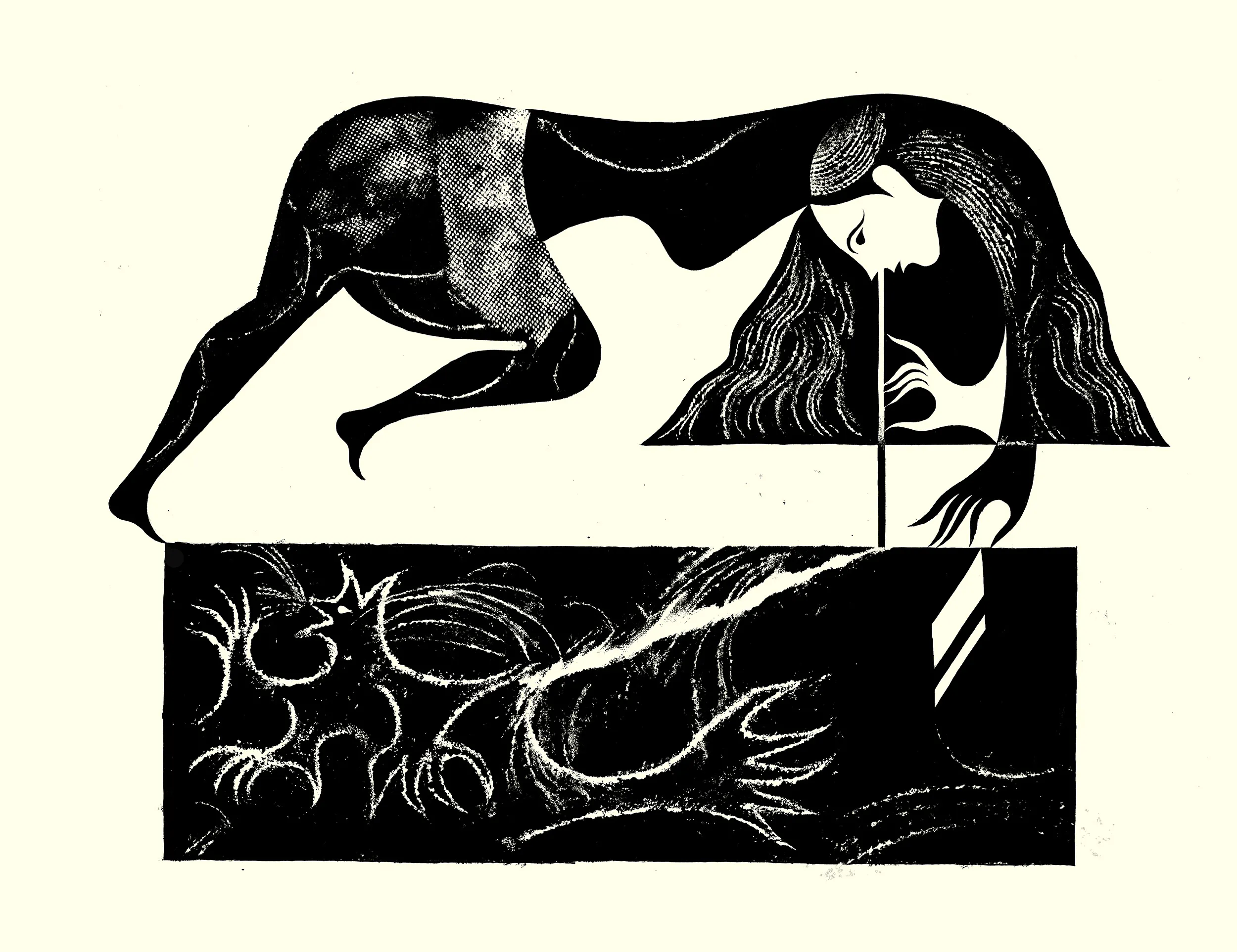
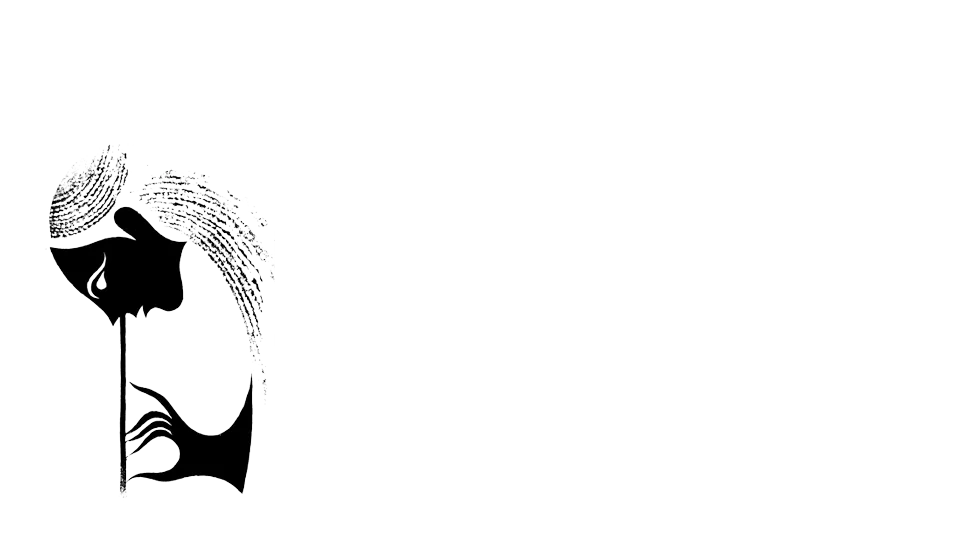
She was on pointe shoes the first half of the performance, and then the lights dimmed. She slipped off the shoes and pulled the dress off over her head. Her back turned, her skin was a pale smudge in the dark. Alone in her panties she walked over to a clothes rail in the wings. She took something from the rail, covered in long hair. It hung over her arm like a skinned animal. She squeezed her legs through the thing and hooked it up over her shoulders, the matted hair tight against her skin. She pulled something over her head, the same hair, greasy, so that it fell over her face. When she laid down, she didn’t look human anymore.
Then the lights turned green. She writhed on the floor like a mermaid. Not The Little Mermaid. I mean covered in hair. Her legs clung together, undulating, like a fish flopping on the shore. Through the thin suit I could see the curve of her legs and the dark slash of her butt, and the hair woven through, and no one made a sound.
A year later I was on a plane to Venice. From the window, streams splayed through the mudflats like hair. By the time I was through customs, the sun had set. There wasn’t a driver for me, I was just another postdoc, waiting for the bus. Fog rolled in over the fields. From the causeway over the lagoon, little islands popped up like cardboard cutouts. I carried my phone with maps open like a lantern clearing the way. Somewhere an oar tapped the water. All the bridges looked the same. That first night I didn’t dream about anything.
I woke to the toilet flushing, pipes rattling in the walls. When I got up, my housemates were already gone. In the shower was a spool of hair. My head was thick, but the fog had cleared. At the cafes, people were already drinking. Ah, our cocaine boy, said the professor when he saw me. He gave me keys to a boat and an address written on a scrap of paper. She’ll take you around the lagoon, he said. Don’t let her charge you for fuel. Cocaine? I heard another professor say as I left.
The address led to an empty square, with a canal along one side. A washing line crossed overhead, hung with pink sheets and a woman’s underwear. I felt embarrassed waiting around there, like I’d entered on someone’s intimacy. Not far away, a church bell rang, slowly, single tolls, each one like it was the last. Then it rang again.
Are you the new one? I turned. Behind me, eyes squinting, head tilted, stood a young woman. The new what? I asked. The professor’s new pet, she said, her hands on her hips. I laughed, but it sounded strange in the empty square. How many have there been? I asked her. She shrugged. She held out her hand. I went to shake it, but she shook her head, and pointed at the keys. Well, she said, where do I have to take you?
Days passed on quiet canals. I collected samples, marked our location, broke oysters off palace walls. She scrolled through her phone. Tourists posed on the bridges above us, a woman's long hair hung over the stone.
Out in the far reaches of the lagoon, the long flats of water, I forgot where we were. Egrets in the mudflats. She smoked joints and extinguished them in the water. Big tankers headed for the oil refinery on shore, their wake rocking our boat. She was less harsh when she was high, pulling a strand of hair across her lips while I dug up samples from the mud. She pointed to a church tower where her aunt had fallen.
That first day she walked me home. The water announced itself by smells. It’s an open sewer, she said, as we crossed a putrescent bridge. Her hand slid along the stone. From a certain angle she looked like my ex. I tripped on a step. A woman’s laugh, like bells, came from one of the houses. The water stank like rotten fish. A slow miasma. Like broken open mollusc shells.
At night I’d started glancing through the instagram of my ex. Mosquitoes sat on the walls just out of reach, waiting for the dark. She didn’t delete any of our photos.
An airplane roared low overhead, and the curlews flew away. I didn’t know how to make sense of it, the data. What the peak levels meant, where it came from. The boat girl smoked her joints, talked about the city. A bar mitzvah in the marketplace. The Venetian football team losing. A wedding on a private island. Sometimes the wind turned and all I could think about was her smell. The tides and streams and vaporetti’s eddies, the whole lagoon throbbed. The boat’s engine whined as we turned back to shore.
The professor didn’t help. He squinted at my data printouts, my maps, as though they were an archaic code. He’d talk about the flora, limoniums, or puccinellia palustris, how they trapped contaminants inside their tissues. Intercellular walls, he’d say, crammed with human excess. I thought about how they had always remained, the lagoon’s life, weaving their tips through the low mud. As though they liked it.
She posted a photo of herself in a swimsuit. She posted a photo of when she danced the mermaid. I didn’t know which photo affected me more, her body, long bare limbs, in the taut nylon suit, or her body covered in hair. The woman on the boat ran her hands through her hair. The vials swirled, propped up under the bow, small organisms colliding.
We were invited to a drinks reception at a Swiss institute. In a bathroom lined with marble, I washed my hands. The soap suds swirled away in the drain, down through the lead pipes in the walls, into a tank in the bowels of the building, sucked out by the tide into the lagoon. When I came out she was sat by an open window, smoking, talking to a group of men. I wondered who was talking to my ex.
He’s looking for cocaine in the lagoon, she said, as I walked over. They all laughed. One man had his shirt unbuttoned, dark swirls of hair spread across his chest. He clapped me on the shoulder. Why cocaine, he pleaded. It’s actually a cocaine metabolite, I mumbled, my voice faint, so not really, you know, cocaine. They shouted in Italian, reached across each other to touch her arm, her leg. They chanted and clapped, coca, coca, coca.
Later, in the bathroom, the man with the hairy chest was cutting lines on the marble bench.
We were skidding over glass. The engine screamed. My mouth tasted metallic, felt numb. She tied up on a wooden post. Do you want to swim, she said, as she pulled her jumper over her head. Don’t look, she said, as she turned and took off her shirt. Her skin a pale smudge in the dark. I fumbled with my trousers. It was dark on the water, the flame of Mestre in the distance. As she slipped over the edge, the boat rocked, and I fell into the bilge. It’s shallow, she shouted.
My feet sunk into the black mud, oozing between my toes. The water up to her hips. She turned to look at me. A birthmark spread across her thighs and stomach. Covered in coarse dark fur. Matted, up to her breasts. The hair glistened, wet. Then she dove. Hot like a bath. It smelled of the inside of shells, or blood warmed in the sun. Things brushed against my legs. I didn’t know which way was down, the sky, the lagoon.
Inspired by Lilian Steiner’s Siren Dance.