Readers’ Entomology
Are you a grasshopper, a spider, or a bee? Welcome to the fifth episode of Against Coffee Table Books.
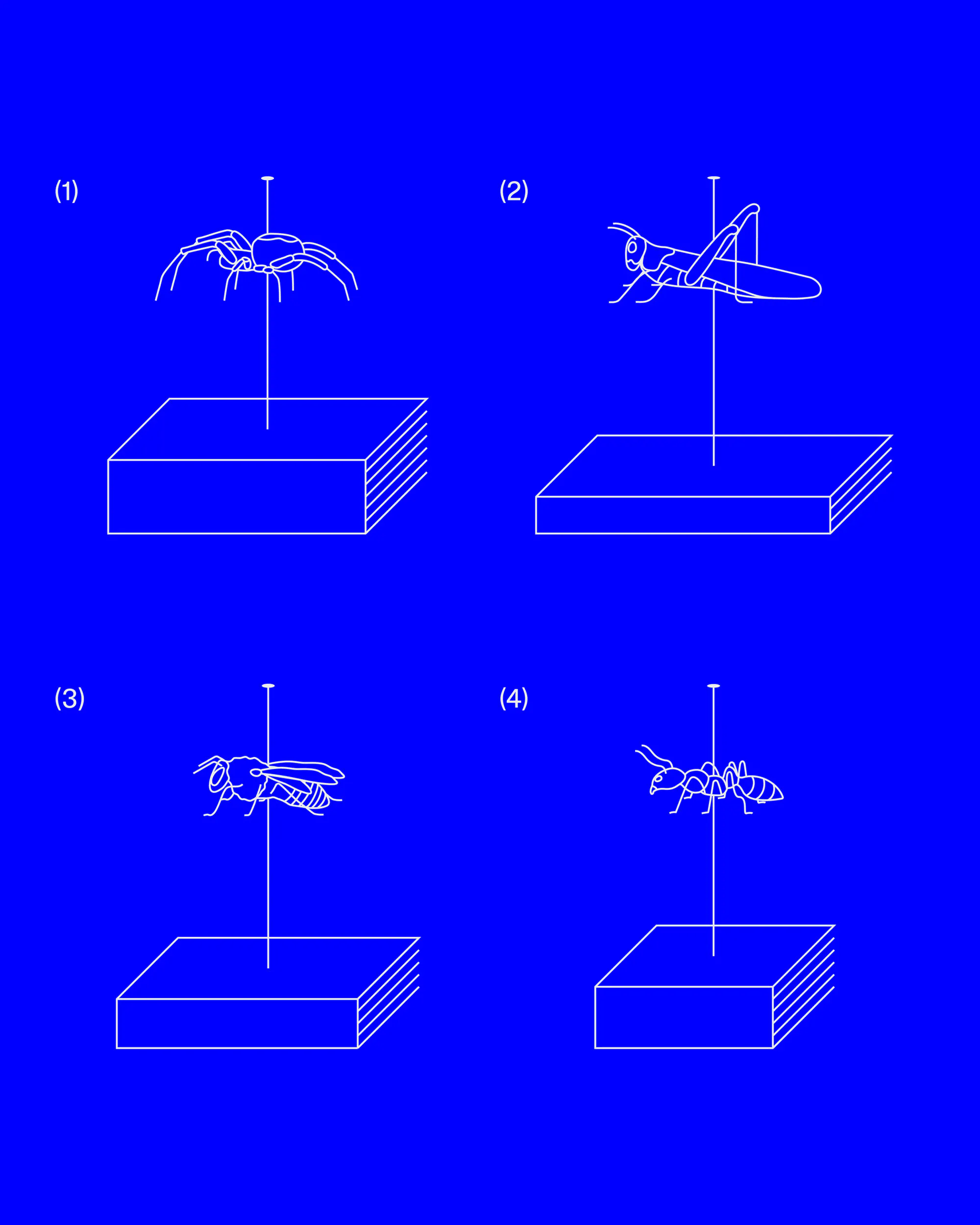
In the very first episode of Against Coffee Table Books, we dabbled in the ethology of bookshelves. A noble, if misunderstood, science concerned with classifying different types of bookshelves based on their character, or, let’s say, attitude towards the ecosystem of the room they live in. This fifth episode takes a sidestep (but a rigorous one) into what might be considered a closely related discipline: the Readers’ Entomology. And yes, as the name suggests, it has to do with bugs, metaphorical ones. Instead of insects, we’re tracking how readers flit from one book to another like slightly anxious moths around a lamp. Welcome back to Against Coffee Table Books. Yes, we’ve made yet another list (please don’t hate us).
Let’s get to it. Anyone following along from the last episode might be wondering if we’ve lost the plot. Didn’t we already cover this? We introduced something called the Reading Method, a system for placing yourself within a taxonomy of reader types. Isn’t “Readers’ Entomology” just a fancier, weirder name for the same thing? Fair question. Here’s the deal: the difference lies entirely in the deliciously vague semantic gap between method and mode.
I know we said we’d go straight to the point. But this slight theoretical detour is crucial to understanding the next phase of our research. Because while the Reading Method focused on how quickly or how often someone reads, the Readers’ Entomology is more concerned with how one jumps from one book to the next. We're talking links, patterns, neural highways made of footnotes and gut feelings. In this school of thought, it's not about habits or reading speeds. It's about the connections — sometimes obvious, sometimes bizarrely inexplicable — that lead a person to go from Bolaño to the latest issue of Vanity Fair in a single afternoon.
And just like any respectable, quasi-objective discipline, Readers’ Entomology leaves no space for snobbery. If you’ve ever felt silently judged for your chaotic literary choices, this is your safe space. We’re not here to mock. We’re here to categorize.
So yeah, this article is for you. Let’s get classifying.
Spider Reader
Let’s begin with what might be considered the most intuitive category in the readers’ entomology: Spider Readers. If you're part of a group of friends, chances are you know someone who perfectly embodies this type. They could be an academic, a hobbyist, or simply someone with a deep passion for their own readings. The Spider Reader is the type who seems to always act with precision, forming a sort of web in constant development, but always perfectly structured. Nothing is left to chance.
These readers constantly develop their own network of knowledge, maintaining an intricate and orderly geometry. A Spider Reader might be someone who falls in love with an author and, until they’ve read every single book that author has written, they won’t pick up anything else. Sure, this might seem like an extreme example, but think about it: how many people do you know who only read thrillers, or who are loyal to a specific publisher's series? Every Spider Reader is driven by a specific passion, yet what unites them is the desire to create a pattern, a geometry of knowledge that serves as their guide. Every book they read is another piece of a mental map taking shape, a puzzle piece added to put together an ongoing quest, whether it’s for personal enjoyment or deeper research. In essence, Spider Readers are always on some kind of mission.
If you observe them in a bookstore, you'll see exactly what I mean. When they spot a book that sparks their interest, you can almost see their synapses fire, like the spider poised to strike a prey caught in its web.
At that moment, they’ve already visualized all the connections that the book will make in their mental library. Have them invite you over for coffee. Now, take a look at their bookshelf: like a True Purist, each book will probably be carefully arranged, perhaps by theme or by author, in a Wall-Mounted Bookcase (not sure what I mean? Check out the earlier episodes, duh!) It’s clear now: you’re dealing with a true Spider Reader, one who, in their endless pursuit of knowledge, weaves their web with precision and purpose.
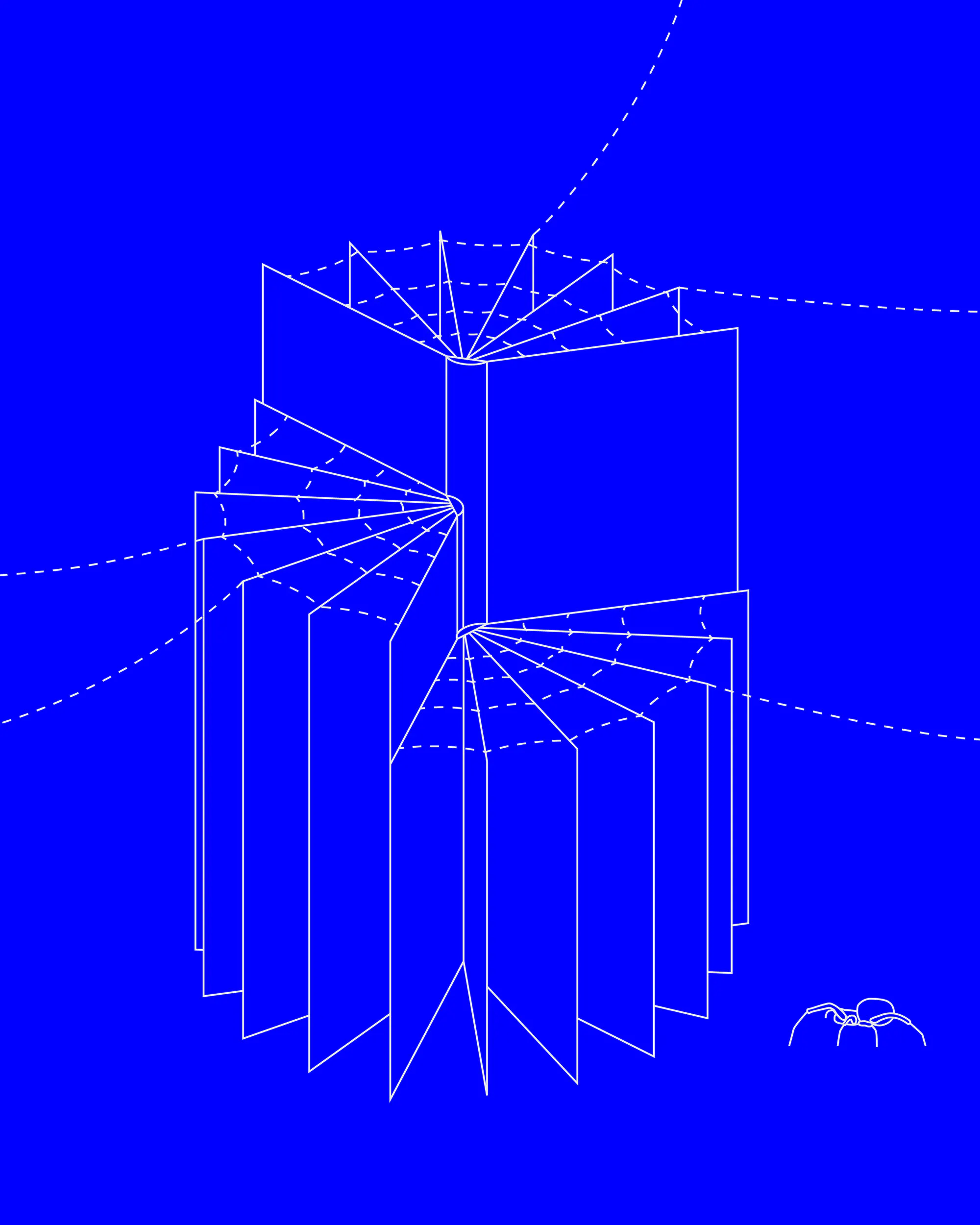
Spider Reader.
Grasshopper Reader
You know that friend who jumps from one book to another like they’re binge-watching a Netflix series? The one who somehow manages to switch from a mainstream novel to a Lacanian analysis of capitalism, not over the course of a summer, but within the same week, or, at best, the same month. You’ll probably call me out, telling me there’s no such thing as an "objective continuity" in what we read, and fair enough, we can't really argue with that. But when you’re dealing with a Grasshopper Reader, the conversation gets a little more complex.
We’re talking about the type of reader who switches genres like it's nothing, with no hesitation, no regret, jumping from philosophy to fiction as if they're just flipping channels. And yeah, sure, there’s nothing wrong with mixing it up like that; it’s what keeps curiosity alive. Like the Grasshopper Reader would tell you, variety breeds intellectual curiosity and expands your horizons. But here's where it gets weird.
These readers always seem to be on the move. It’s like they can’t wait to finish one book so they can pounce on the next. There’s no plan, no overarching web of knowledge they’re steadily building. No slow, careful expansion of thought. Nope. Instead, there’s this almost frantic hunger, this insatiable drive to devour something new, anything new.
It’s not that a Grasshopper Reader doesn’t have their own methods, though. They do. They definitely have a rhythm, a certain speed they prefer. But what matters most to them isn’t the structure, it’s the flow. A book doesn’t end unless it’s immediately followed by another. A magazine is just a stepping stone, a launch pad to the next intellectual leap.
The real kicker is that these readers aren’t looking for depth in the conventional sense. They’re not in it for the long haul, seeking to build a deeper understanding. They’re in it for the rush. Each new book is a quick hit of fresh ideas, a high that keeps them chasing after the next one. They don’t care about tying it all together, about making a coherent map of their intellectual journey. They’re chasing newness, the thrill of discovery.
And it’s not even like they’re random or aimless: the Grasshopper Reader has mastered the art of hopping across various topics, styles, and disciplines, without ever settling into any one thing long enough to get bored. They might be reading about Marx one day and then devouring a graphic novel the next, but somehow, it’s all part of the same manic, endless search for whatever comes next. At the end of the day, it's not about finishing books. It's about movement. It’s about that feeling of always being in motion, always in pursuit of something new, something different. For the Grasshopper Reader, the real adventure doesn’t lie in where they’ve been, but rather in where they’re headed next.
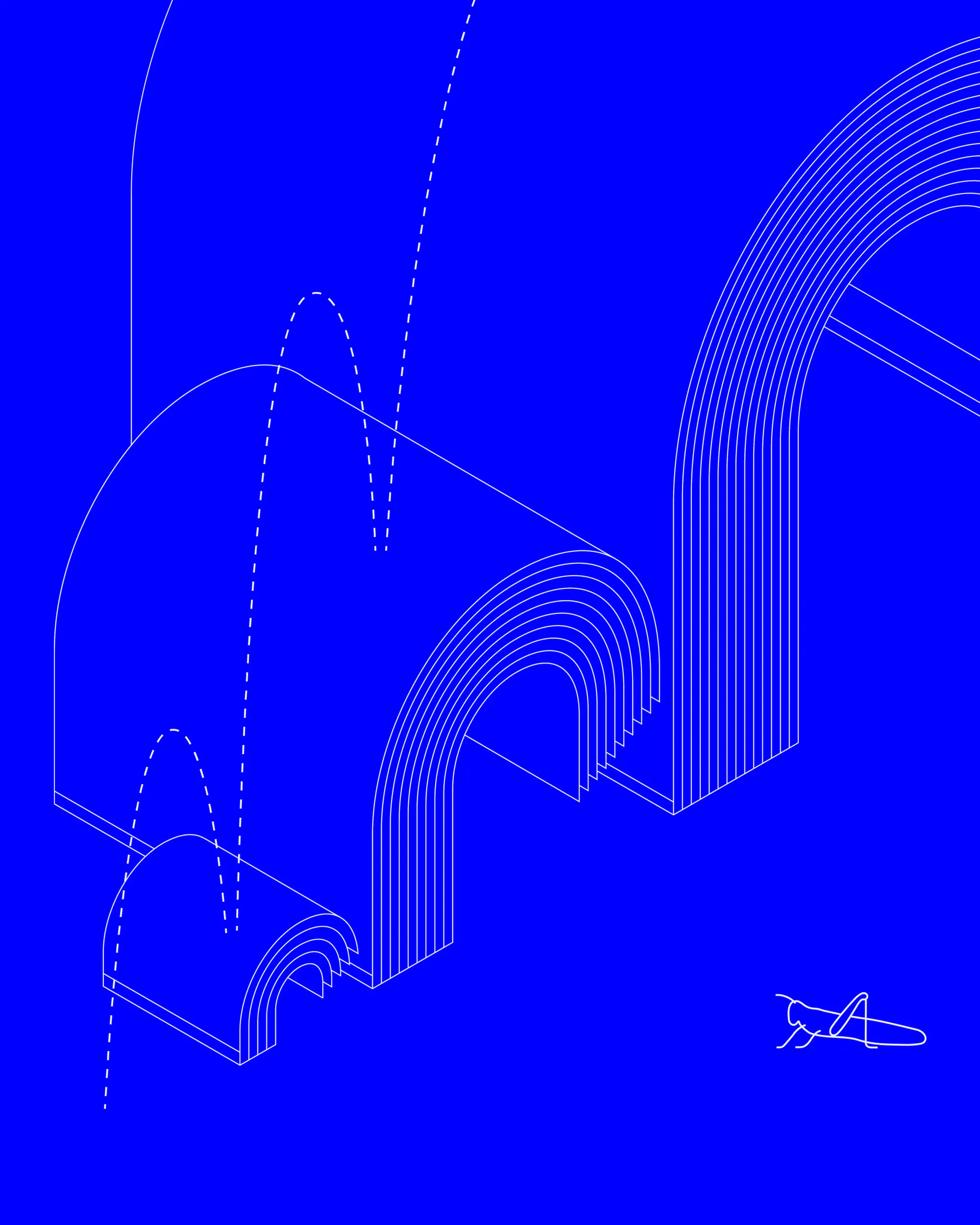
Grasshopper Reader.
Bee Reader
There’s a type of reader that, at first glance, might seem hard to pin down. On the one hand, they seem to hop from one topic to another like a grasshopper; one moment they’re immersed in speculative fiction, the next they’re knee-deep in a post-structuralist essay on meaning and media.
But look closer, and you’ll start to notice a thread. There’s a kind of hidden logic to their chaos. It’s similar to a spider’s web, but one that only makes sense after the fact. Still, they’re not quite a grasshopper, and not quite a spider either. That’s why the entomology of reading had to invent a new category altogether: the Bee Reader.
Bee Readers usually start with a very clear idea in mind: an interest, a question, a problem they need to understand. That initial obsession becomes their hive, and from there, they set out. They move between texts that, at first, seem closely connected. But as time goes on, their reading widens. The books they pick up start to drift further and further from that original idea. And yet, somehow, it all still circles back. The focus may have shifted. The question may have evolved. But the root remains the same.
Bee Readers collect. They roam. They study. Like bees exploring far beyond the hive, they venture out, dive into unexpected sources, and gather nectar from strange, surprising places. But they always come back. Back to the core idea, back to the central question, only now, they return carrying something new. A new insight, a new material to build another cell in the hive of their knowledge. They may seem like they’re aimlessly drifting, but don’t be fooled. Every detour, every weird side-reading, has its purpose and eventually finds its place. It’s all part of a larger architecture, a kind of intellectual nest made up of borrowed pieces that are deeply and unmistakably personal. For Bee Readers, reading is a cycle. It’s not linear, not goal-driven like the ant (spoiler alert!), nor is it chaotic-creative like the grasshopper. It’s a dance between departure and return. Curiosity takes them far, but the project, the hive, always calls them back.
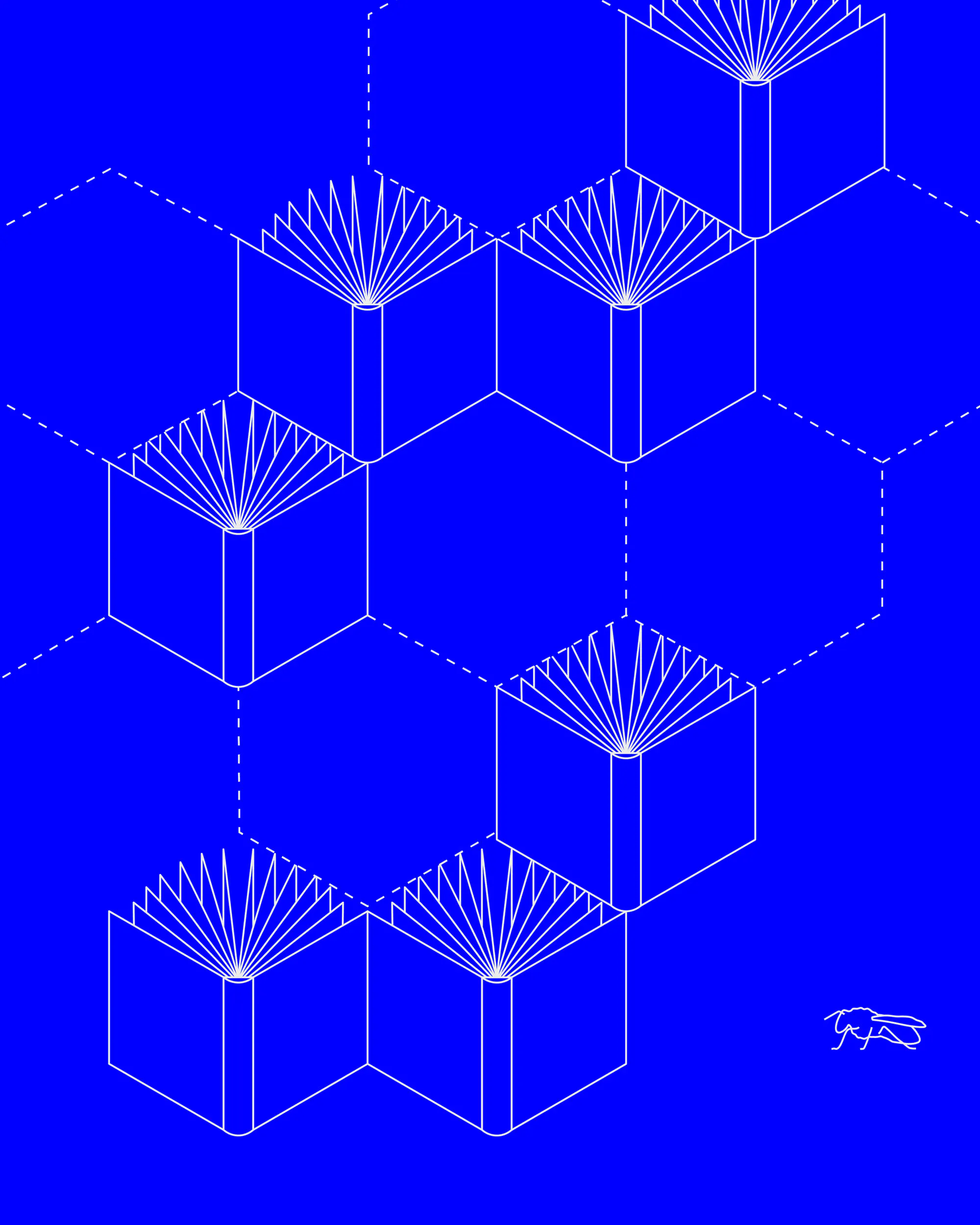
Bee Reader.
Ant Reader
You probably have that one friend in your group who somehow always manages to read the exact book everyone’s talking about right before it blows up on Bookstagram. You don’t know how they do it. It's like they have a radar for what's about to trend.
Whether you're into design, obscure Russian literature, or indie art magazines, the Ant Reader has already read the thing everyone will be discussing next month, and probably already posted about it. In the entomology of readers, they are the ants. Not because they follow the crowd, but because they’re tuned into the ecosystem around them. They know exactly where to dig, what to carry, and, most importantly, why it matters.
Ant Readers are not passive consumers of trends. They’re ahead of them. They move through the noisy chaos of cultural content with precision, scanning headlines, skimming reviews, and watching what’s being shared, somehow always knowing what’s worth their time. And when they commit to a book, a magazine, a zine, it’s rarely random. It’s a calculated choice. It fits into the broader social conversation, the online hive-mind, and the intellectual terrain of the now. And guess what, they don’t just read the book. They know what people think about the book, sometimes even before they’ve finished it.
Their reading isn’t just personal, it’s social. It’s about being part of a larger collective movement. Some of them move so quickly, you’d swear they’re psychic. They’re already forming opinions before you’ve even heard of the author. But make no mistake, they’re not just trend chasers. What they gather becomes material. It feeds the conversation. They bring value to the network, and they know it.
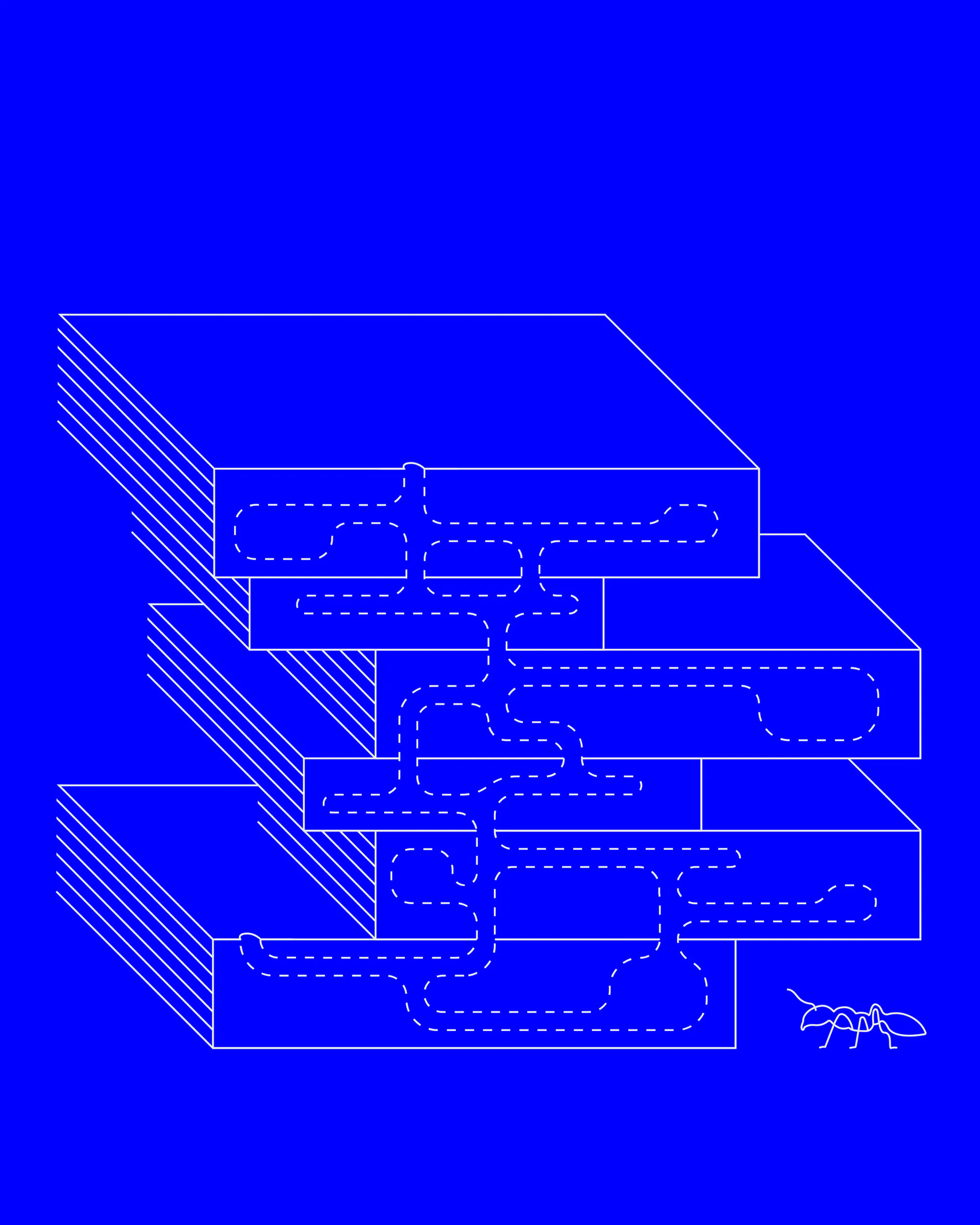
Ant Reader.
Notes from a reader’s entomologist
here’s a kind of golden rule in the readers’ entomologist: “The order in which you read things shapes how you read them”.
Now, if you’re a Grasshopper Reader, you probably just rolled your eyes. But this isn’t about hierarchy or judgment. It’s not saying that reading one way is better than another. Rather, the point is: every reader, whether they know it or not, builds a private library, not just of books, but of connections between books. And that structure — what comes first, what follows, what’s left unfinished — reveals a lot about who they are.
Each reading path creates its own kind of narrative. A private mental playlist, a constellation of ideas that starts to look like a map: unique, personal, often unconscious. And like physical libraries, no two look the same.
The goal of readers’ entomology isn’t to classify for the sake of it. It’s not about putting readers in little boxes. It’s about something more generous: making space for the individuality of how we read. It’s about naming the ways people move through texts so that those movements become visible.
And maybe, just maybe, if we understand our own reading species a little better, we’ll gain a deeper understanding of how we think, connect, and grow.
bruno. is the pseudonym of Andrea Codolo and Giacomo Covacich since 2013. The project, which is based in Venice, combines a graphic design studio, an exhibition space and a specialist bookstore focussing on visual communication and international independent publishers. As for communication design, the studio deals in particular with visual identities, setting up exhibitions, publishing projects, information design and data visualisation in collaboration with institutions, cultural foundations and private clients. Since 2014 bruno has also become a publishing brand.
bruno. is the pseudonym of Andrea Codolo and Giacomo Covacich since 2013. The project, which is based in Venice, combines a graphic design studio, an exhibition space and a specialist bookstore focussing on visual communication and international independent publishers. As for communication design, the studio deals in particular with visual identities, setting up exhibitions, publishing projects, information design and data visualisation in collaboration with institutions, cultural foundations and private clients. Since 2014 bruno has also become a publishing brand.